EXHIBIT 99.3
Published on
Exhibit 99.3

Gene Therapy For Congenital Leber Amaurosis (LCA5) Dr. Rodrigo Jorge Ribeirão Preto Medical
School University of São Paulo - Brazil

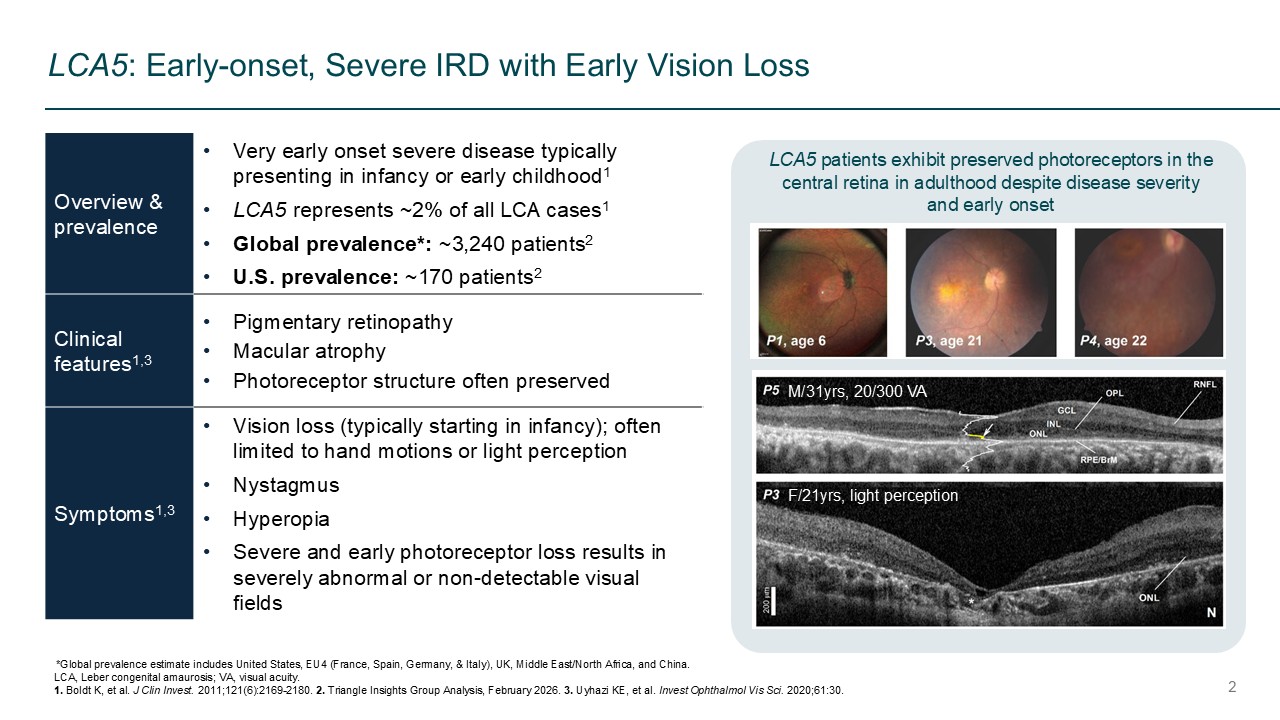
LCA5: Early-onset, Severe IRD with Early Vision Loss Overview & prevalence Very early onset
severe disease typically presenting in infancy or early childhood1 LCA5 represents ~2% of all LCA cases1 Global prevalence*: ~3,240 patients2 U.S. prevalence: ~170 patients2 Clinical features1,3 Pigmentary retinopathy Macular
atrophy Photoreceptor structure often preserved Symptoms1,3 Vision loss (typically starting in infancy); often limited to hand motions or light perception Nystagmus Hyperopia Severe and early photoreceptor loss results in severely
abnormal or non-detectable visual fields 2 *Global prevalence estimate includes United States, EU4 (France, Spain, Germany, & Italy), UK, Middle East/North Africa, and China. LCA, Leber congenital amaurosis; VA, visual acuity. 1. Boldt
K, et al. J Clin Invest. 2011;121(6):2169-2180. 2. Triangle Insights Group Analysis, February 2026. 3. Uyhazi KE, et al. Invest Ophthalmol Vis Sci. 2020;61:30. M/31yrs, 20/300 VA F/21yrs, light perception LCA5 patients exhibit preserved
photoreceptors in the central retina in adulthood despite disease severity and early onset

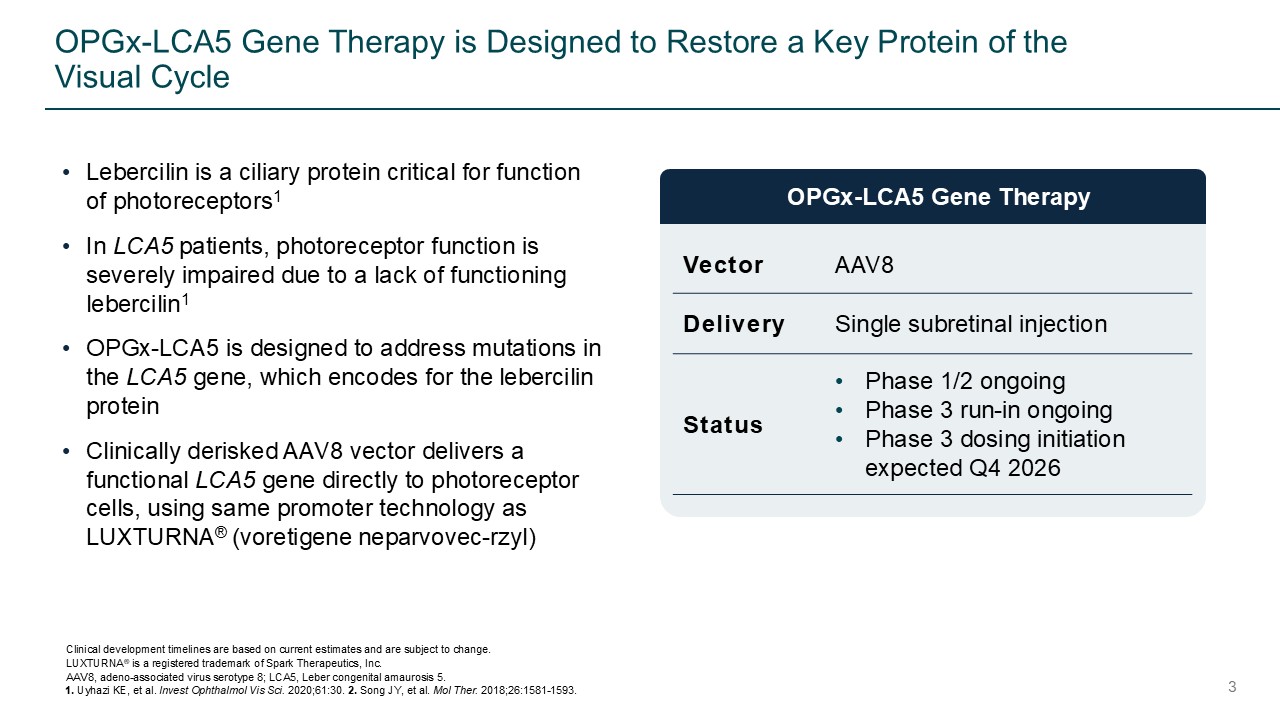
OPGx-LCA5 Gene Therapy is Designed to Restore a Key Protein of the Visual Cycle OPGx-LCA5 Gene
Therapy Vector AAV8 Delivery Single subretinal injection Status Phase 1/2 ongoing Phase 3 run-in ongoing Phase 3 dosing initiation expected Q4 2026 Lebercilin is a ciliary protein critical for function of photoreceptors1 In LCA5
patients, photoreceptor function is severely impaired due to a lack of functioning lebercilin1 OPGx-LCA5 is designed to address mutations in the LCA5 gene, which encodes for the lebercilin protein Clinically derisked AAV8 vector delivers a
functional LCA5 gene directly to photoreceptor cells, using same promoter technology as LUXTURNA® (voretigene neparvovec-rzyl) Clinical development timelines are based on current estimates and are subject to change. LUXTURNA® is a
registered trademark of Spark Therapeutics, Inc. AAV8, adeno-associated virus serotype 8; LCA5, Leber congenital amaurosis 5. 1. Uyhazi KE, et al. Invest Ophthalmol Vis Sci. 2020;61:30. 2. Song JY, et al. Mol Ther. 2018;26:1581-1593. 3

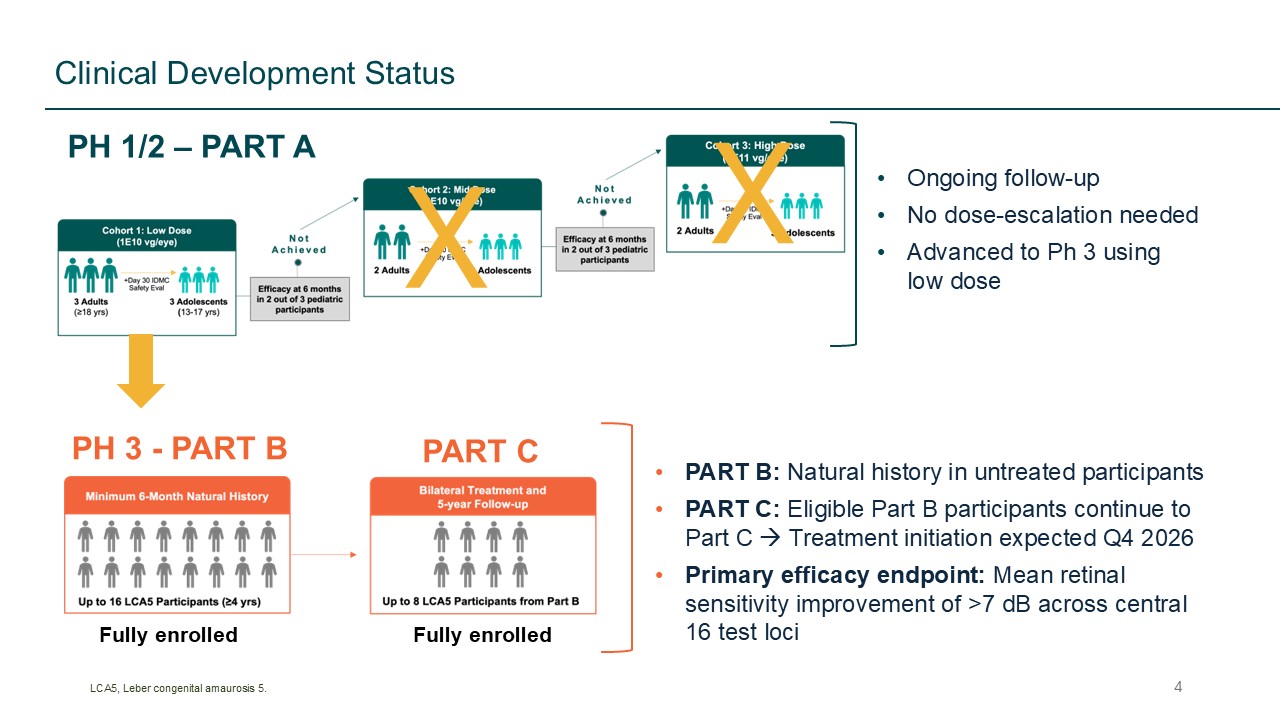
Clinical Development Status 4 PART B: Natural history in untreated participants PART C:
Eligible Part B participants continue to Part C Treatment initiation expected Q4 2026 Primary efficacy endpoint: Mean retinal sensitivity improvement of >7 dB across central 16 test loci LCA5, Leber congenital amaurosis 5. PH 1/2 –
PART A X X PH 3 - PART B Ongoing follow-up No dose-escalation needed Advanced to Ph 3 using low dose PART C Fully enrolled Fully enrolled

Clinical Development Status 5 PART B: Natural history in untreated participants PART C:
Eligible Part B participants continue to Part C Treatment initiation expected Q4 2026 Primary efficacy endpoint: Mean retinal sensitivity improvement of >7 dB across central 16 test loci LCA5, Leber congenital amaurosis 5. PH 1/2 –
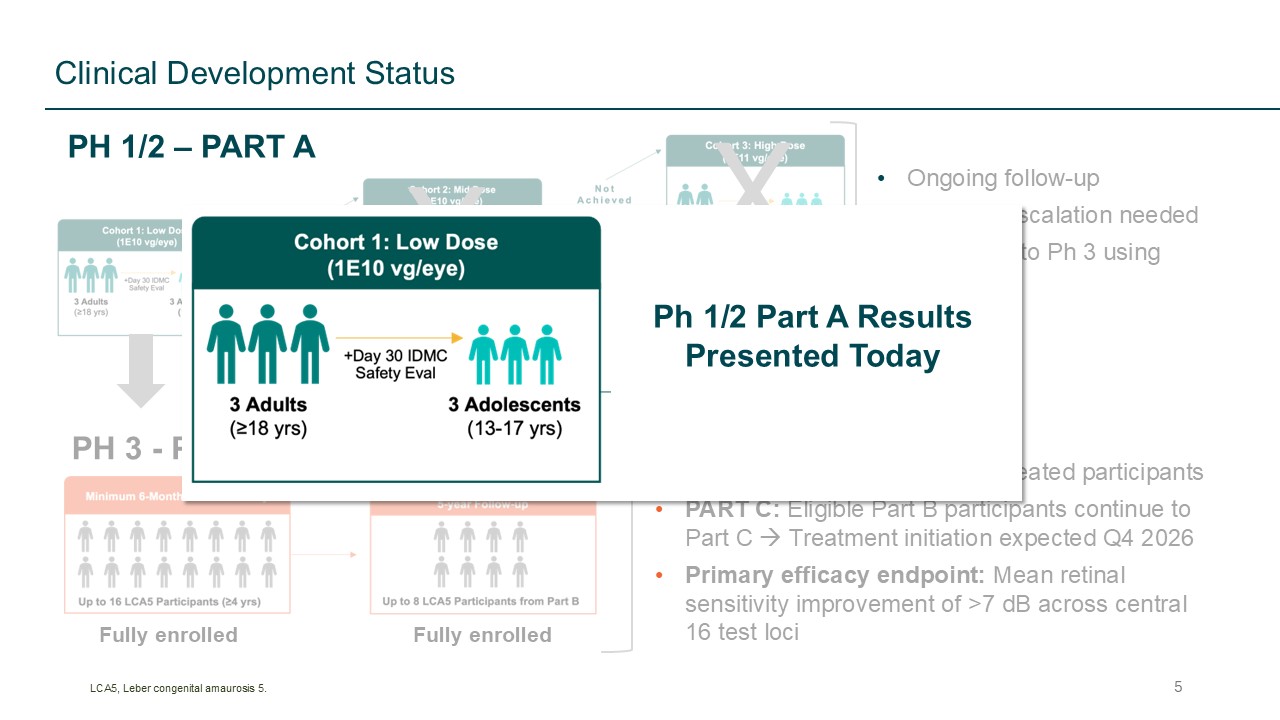
PART A X X PH 3 - PART B Ongoing follow-up No dose-escalation needed Advanced to Ph 3 using low dose PART C Fully enrolled Fully enrolled Ph 1/2 Part A Results Presented Today

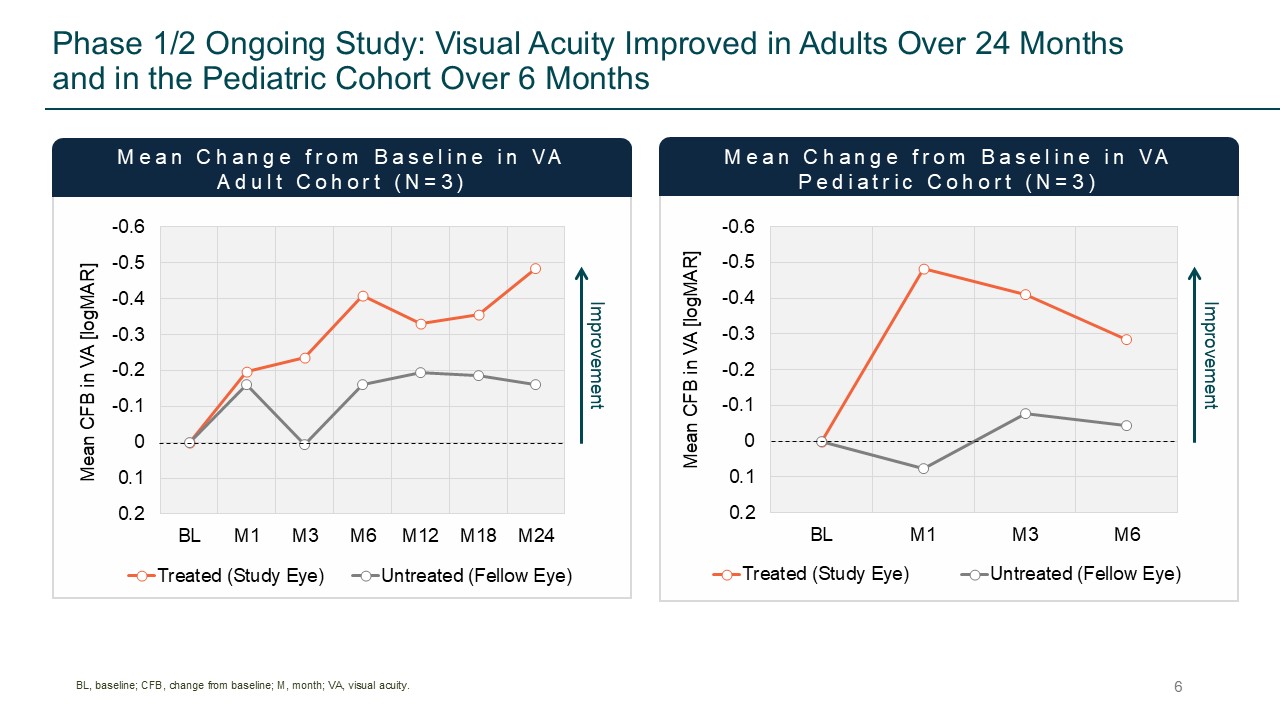
Phase 1/2 Ongoing Study: Visual Acuity Improved in Adults Over 24 Months and in the Pediatric
Cohort Over 6 Months 6 Improvement Improvement Mean Change from Baseline in VA Adult Cohort (N=3) Mean Change from Baseline in VA Pediatric Cohort (N=3) BL, baseline; CFB, change from baseline; M, month; VA, visual acuity.

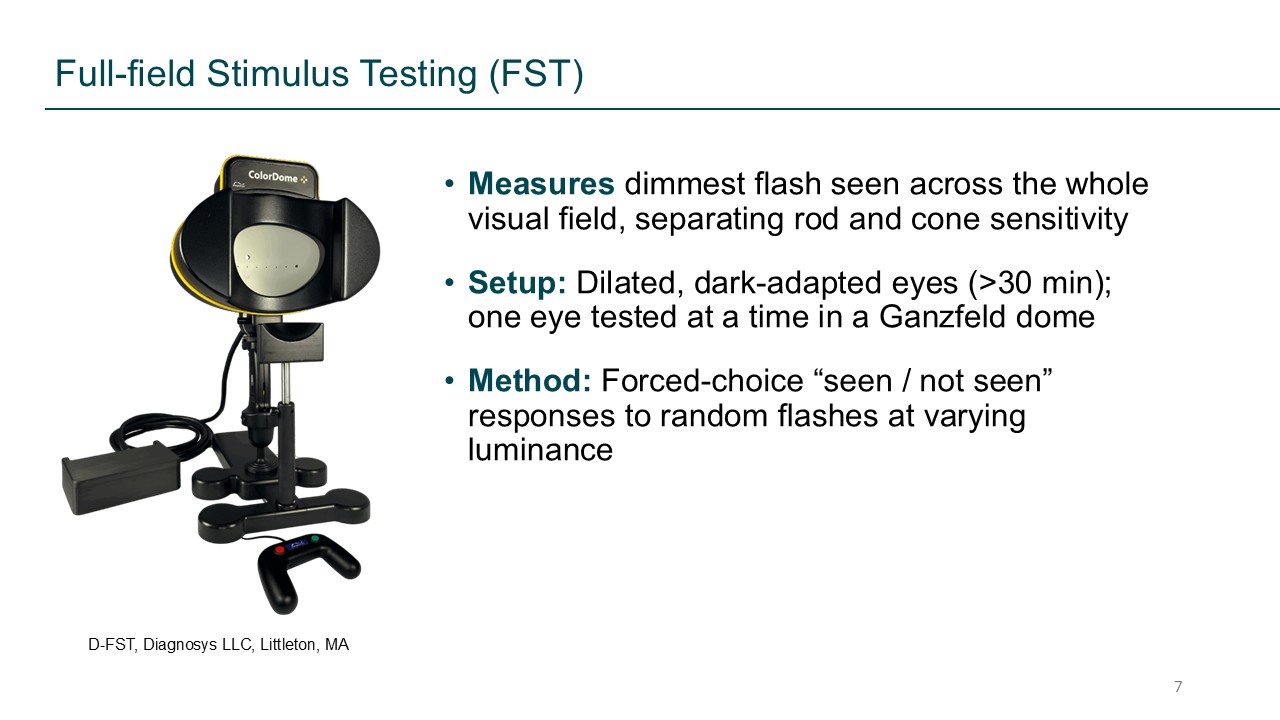
Full-field Stimulus Testing (FST) Measures dimmest flash seen across the whole visual field,
separating rod and cone sensitivity Setup: Dilated, dark-adapted eyes (>30 min); one eye tested at a time in a Ganzfeld dome Method: Forced-choice “seen / not seen” responses to random flashes at varying luminance D-FST, Diagnosys LLC,
Littleton, MA 7

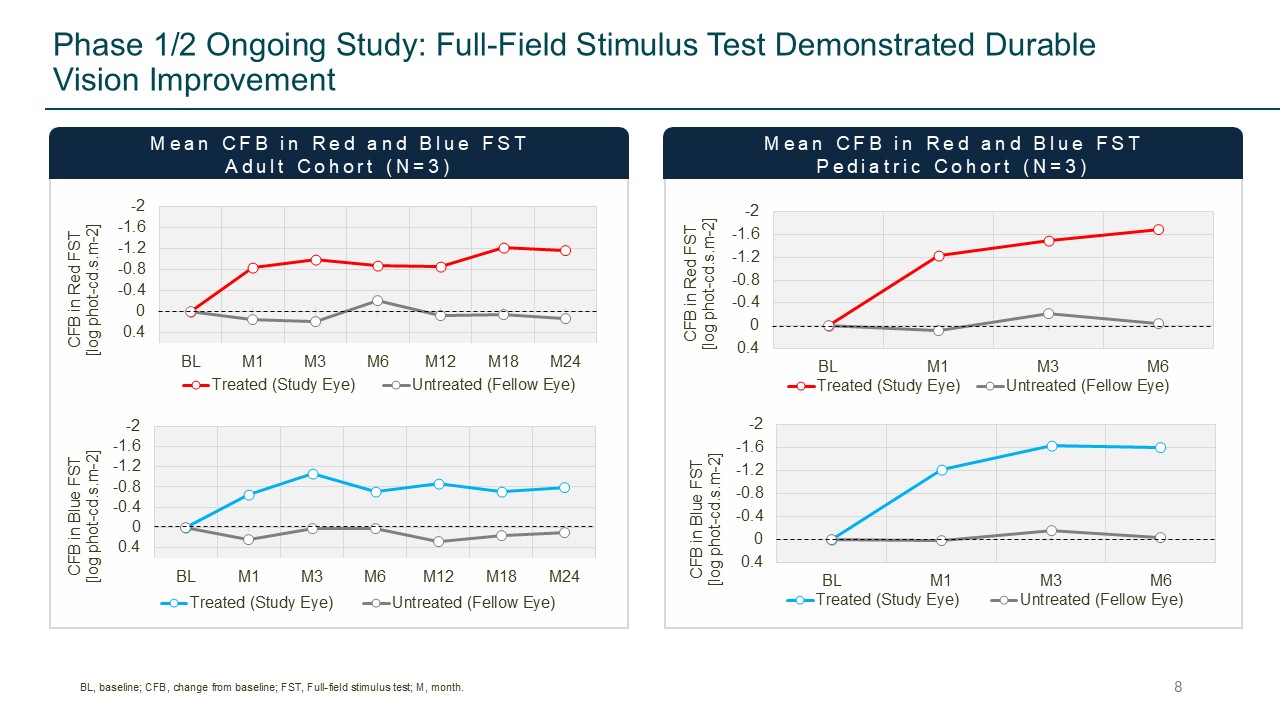
Phase 1/2 Ongoing Study: Full-Field Stimulus Test Demonstrated Durable Vision Improvement 8 BL,
baseline; CFB, change from baseline; FST, Full-field stimulus test; M, month. Mean CFB in Red and Blue FST Adult Cohort (N=3) Mean CFB in Red and Blue FST Pediatric Cohort (N=3)

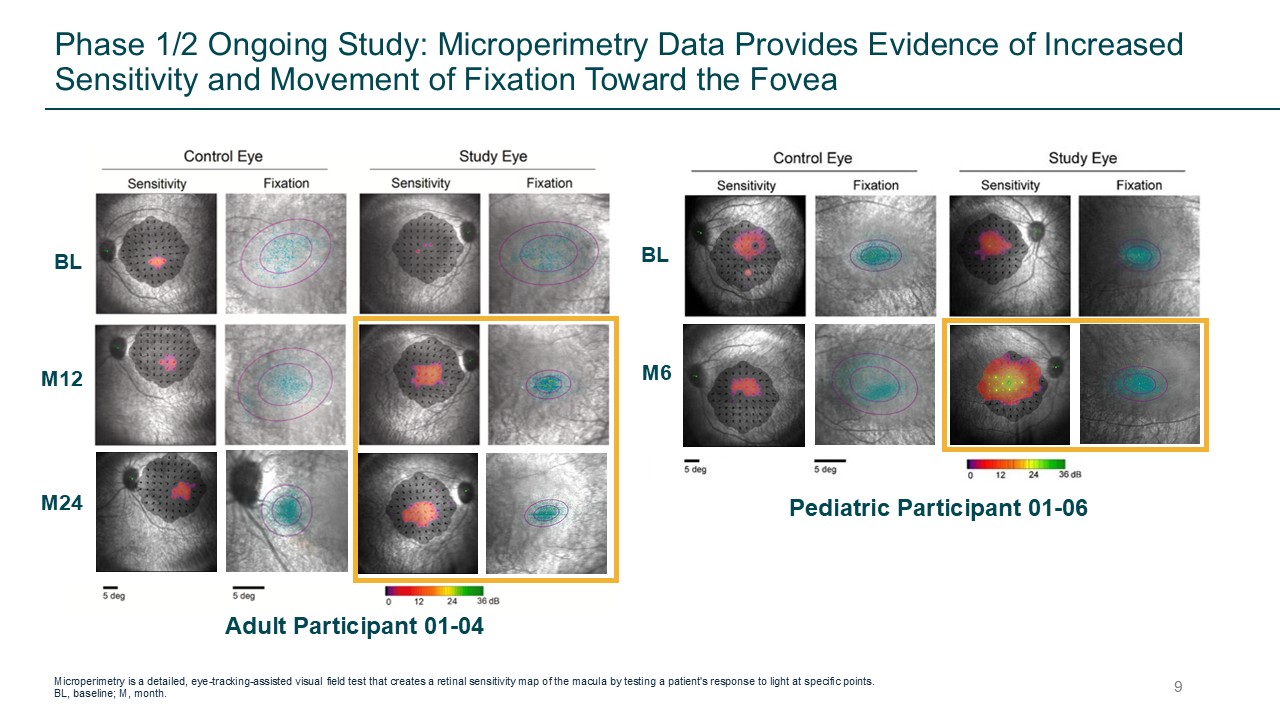
Phase 1/2 Ongoing Study: Microperimetry Data Provides Evidence of Increased Sensitivity and
Movement of Fixation Toward the Fovea Microperimetry is a detailed, eye-tracking-assisted visual field test that creates a retinal sensitivity map of the macula by testing a patient's response to light at specific points.BL, baseline; M,
month. 9 Adult Participant 01-04 Pediatric Participant 01-06 BL M12 M24 BL M6

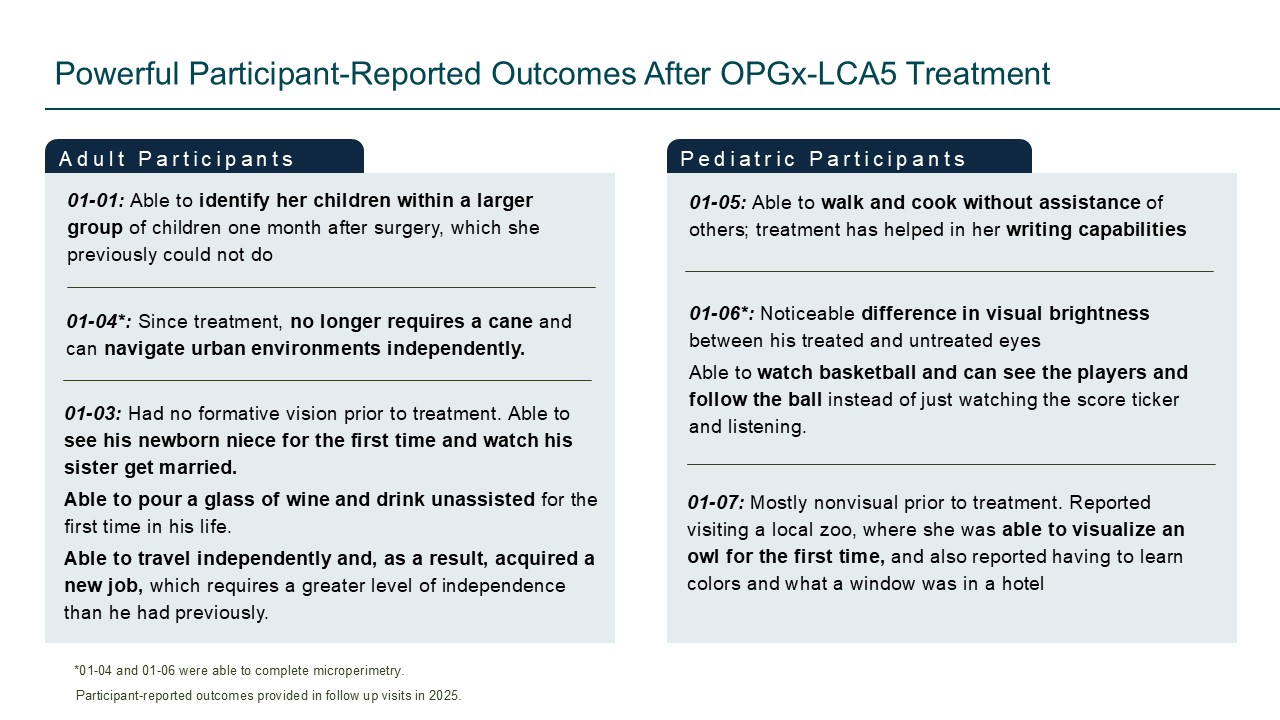
Powerful Participant-Reported Outcomes After OPGx-LCA5 Treatment 01-01: Able to identify her
children within a larger group of children one month after surgery, which she previously could not do Adult Participants 01-03: Had no formative vision prior to treatment. Able to see his newborn niece for the first time and watch his
sister get married. Able to pour a glass of wine and drink unassisted for the first time in his life. Able to travel independently and, as a result, acquired a new job, which requires a greater level of independence than he had
previously. 01-04*: Since treatment, no longer requires a cane and can navigate urban environments independently. Pediatric Participants 01-05: Able to walk and cook without assistance of others; treatment has helped in her writing
capabilities 01-06*: Noticeable difference in visual brightness between his treated and untreated eyes Able to watch basketball and can see the players and follow the ball instead of just watching the score ticker and listening. 01-07:
Mostly nonvisual prior to treatment. Reported visiting a local zoo, where she was able to visualize an owl for the first time, and also reported having to learn colors and what a window was in a hotel Participant-reported outcomes provided
in follow up visits in 2025. *01-04 and 01-06 were able to complete microperimetry.

A Conversation with Lindsay Rambo, a Patient Living with LCA5: What do you wish people could feel
or experience to truly understand the potential impact of this treatment?

Thank you Gene Therapy For Congenital Leber Amaurosis (LCA5) Dr. Jorge Rodrigo Ribeirão Preto
Medical School University of São Paulo - Brazil